“Tim” One of the last and largest of the “Giant Tuskers”.

African elephant (Loxodonta africana).
Watercolor, 22″ x 30″, on Lanaquarelle rough 300 lb, 2021. $22,000
To zoom in click on the image then click the magnifying glass at upper right corner of the light-box.
About Giant Tuskers:
According to the Tsavo Trust, there are only around 20 giant tuskers left in the world today. Giant tuskers, so called because their tusks can reach the ground, are challenged by habitation compression, conflict with local farmers and poachers.
In Kenya, the three most well-known giant tuskers have all recently died. Satao II was killed by poachers, probably with poisoned arrows, two years ago in Tsavo and the Elephant Queen (known as F-MU1 to scientists) died of natural causes earlier last year (also in Tsavo).
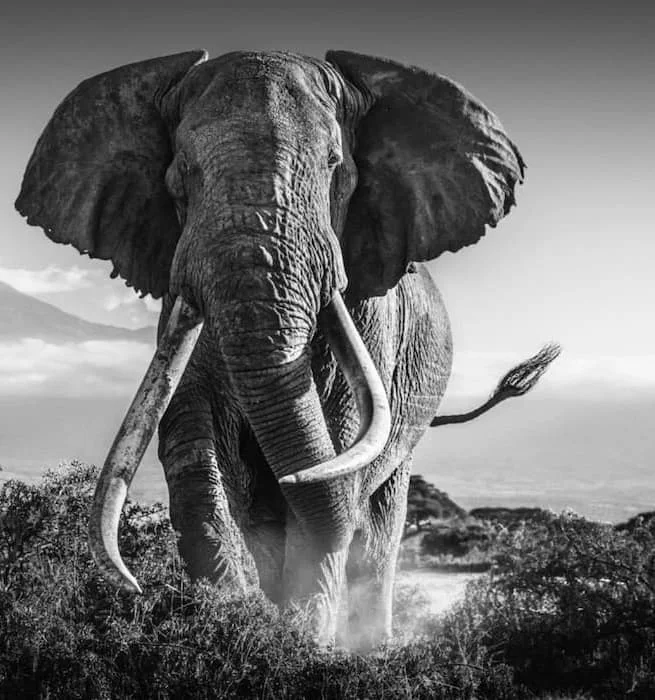
David Yarrow, a renown wildlife photographer, who had a long and loving history with Tim, gave me his kind permission t use one of his obituary photos, taken shortly before Tim’s death. David’s photos are characterized by exquisite and stark natural lighting and dramatic angles, and he captured the majesty and a sense of forward momentum in this photo.
Photo of Tim, just weeks before his death by David Yarrow:

Winner Artists For Conservation: Pollyanna Pickering Award,
2021″Best Depiction of an endangered animal”
Included (one of 12 images from 500 submissions) in the 2022 AFC calendar.

About Big Tim:
Big Tim was beloved by hundreds of thousands of people worldwide and was a major attraction at Amboseli, his home for 50 years. He was, according to Tsavo gamekeepers “intelligent, mischievous, and good-natured – a genuine gentle giant”.
Tim had survived attacks with spears by farmers during his frequent night raids on crops, was almost drowned in a mud pit, but was saved by Tsavo gamekeepers with help from the Sheldrake Elephant Trust, and was constantly sought by poachers. Despite years of such near-misses, he died of natural causes in March 2020.
Range Map of African Elephants

Check out a step-by-step slideshow of the painting in progress.
About the Painting:
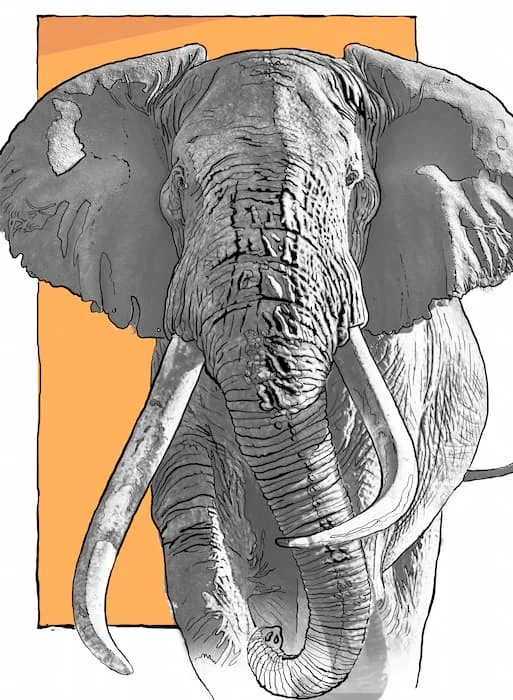
I started by arranging the David Yarrow image on my laptop in Photoshop, trying out different sizes and colors of the background panel, which, as usual is drawn to golden ration dimensions (1: 1.618). I extended and curled the trunk, but the rest of the image is fairly faithful to David’s photo. The reference photo was black and white but I wanted to capture late afternoon, early sunset golden amber hues to highlight the bumps and ridges that characterize Tim’s features.
I then did a series of small-scale studies to establish palette and make final paper selection.
5″ x 7″ study for “Tim”.
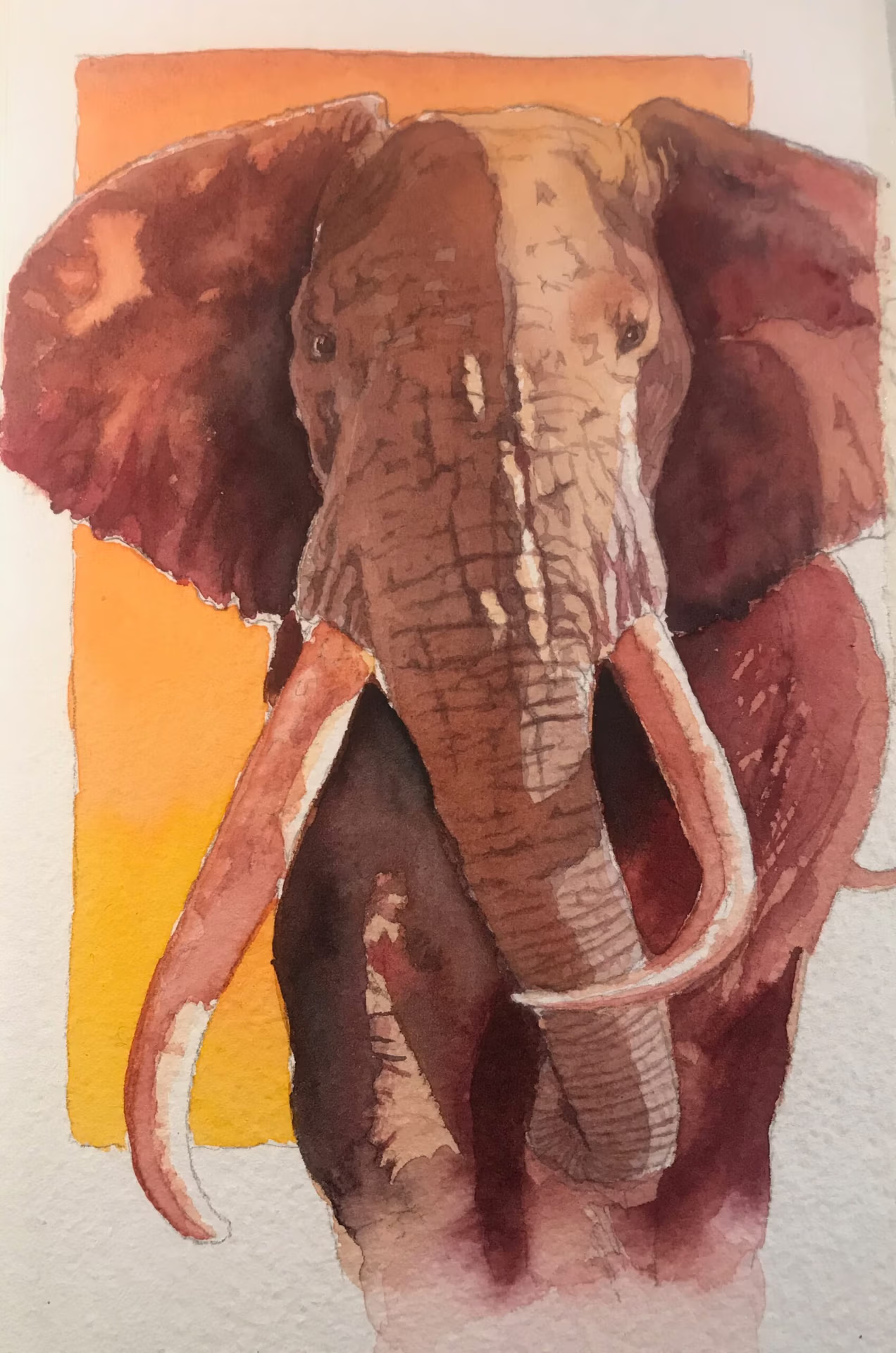
I only used three brushes for the entire painting, my Marie’s #6 pointed round synthetic sable (which comes to such a fine point, and holds so much media, that it is ideal for even hyper-fine details such as the skin pebbling between each wrinkle), and my Loew-Cornell 1″ oval flat, for larger washes. I used a 2″ Princeton synthetic mottler for the background wash, which I was unhappy with as it kept shedding black bristles everywhere!
The pebbled texture was achieved by liberally sprinkling sea salt over very wet washes of color.
The paper is Lanaquarelle 300 lb rough, from Legion Paper, chosen after testing 7 different high-end watercolor papers.
My Elephant Conservation Commitment
25% of all proceeds
from “Tim” artwork and merchandise goes to the David Sheldrick Trust, in Kenya, for their elephant orphans programme.
Buy the Original or Prints
Coming Soon: Custom Frames and Matt boards - Over 100 styles!!!