
Mackinder's (or Kenyan) Eagle Owl
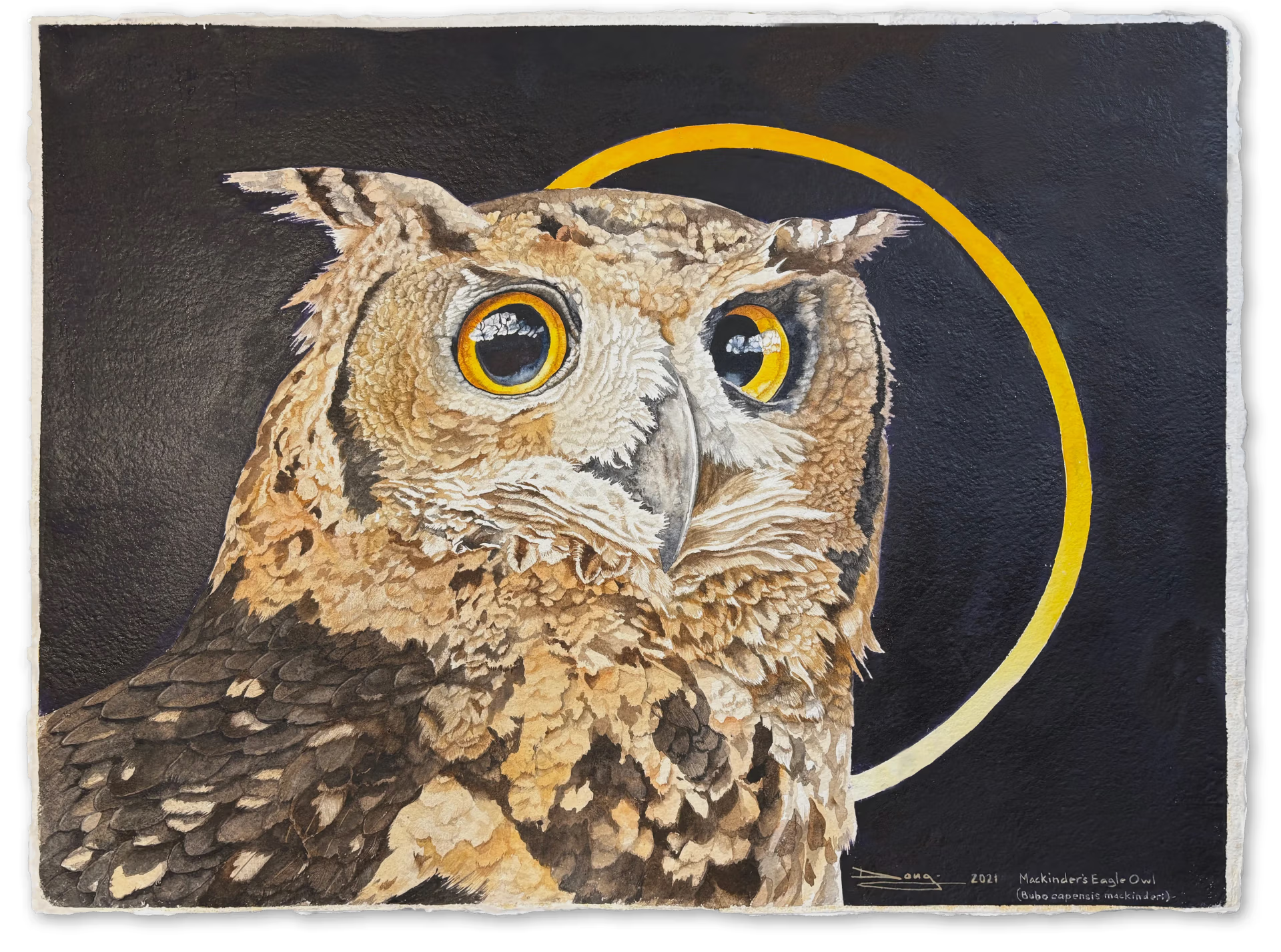
Watercolor, 31″ x 23″, on Legion Special Handmade, rough 300lb: $5,000
The Mackinder’s eagle owl (Bubo capensis mackinderi)
About MacKinder’s Eagle Owls
The Kenyan, or Mackinder’s eagle owl, is a subspecies of the eagle owl. Mackinder’s eagle owls in central Kenya are generalist predators capable of exploiting an agricultural niche that is devoid of most other predators.
This is a large owl, (the largest of the eagle owls), though intermediate in size among other large Bubo owls. Its total length ranges from 46 to 61 cm (18 to 24 in). Males weigh from 905 to 1,387 g (1.995 to 3.058 lb) while the larger females range from 1,240 to 1,800 g (2.73 to 3.97 lb).[4] The wing chord measures 34.3–41.8 cm (13.5–16.5 in) while the tail measures 15.5–26.6 cm (6.1–10.5 in). This owl is dark brown above with prominent ear-tufts and yellow or yellowish-orange eyes. It is dark below with the sides of the breast being blotchy brown and the paler chest overlaid with white, black and tawny-fulvous markings, variously. The facial disc is fulvous-brown, with a distinct black or dark brown frame that becomes broader towards the neck. Both the tail and wing feathers are barred with light and dark brown. The toes and tarsi are densely feathered, with the little visible skin being brown above and yellowish below the feet.
About the MacKinder’s Eagle Owl at KBOP
The male Mackinder’s rescued by Kenya Bird Of Prey Trust was discovered tangled in horticultural plastic and had poked its eye out. It is comfortably housed next to some verreux eagle owls in their Naivasha sanctuary, and is begrudgingly tolerant of human interaction (as opposed to a verrueax, raised from a chick, which has become part of the human family at the trust.
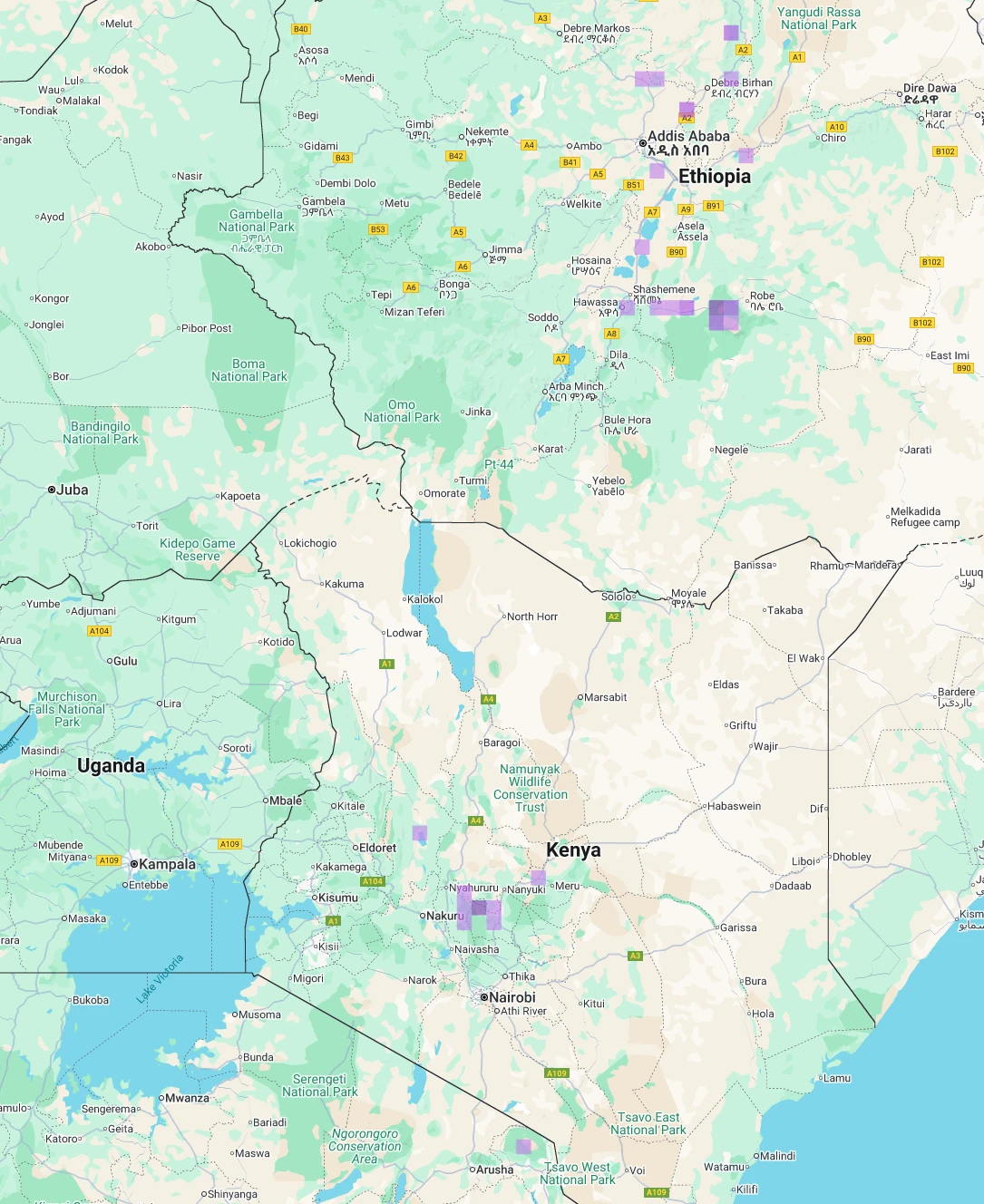
Range Map of the MacKinder’s Eagle Owl
About the painting:
I saw the MacKinders on a trip to the trust and was impressed by its sheer bulk and presence, though he was a bit camera shy, so I resorted to Getty images for a stock photo as my core reference.
After blocking in the deep indigo/purple background I began the painstaking process of laying in wet-on-wet and wet-on-dry feathers, one at a time to build the particular, ruffled appearance. The reflections in the eyes were especially successful (IMHO), and I was pleased by the dull, rough texture of the beak. Without strong side lighting to create cast shadows in my reference I was less able to build a strong sense of depth or solidity, but I’m happy enough with the detailing and textures.
I gave him his missing eye back too, for aesthetic reasons.
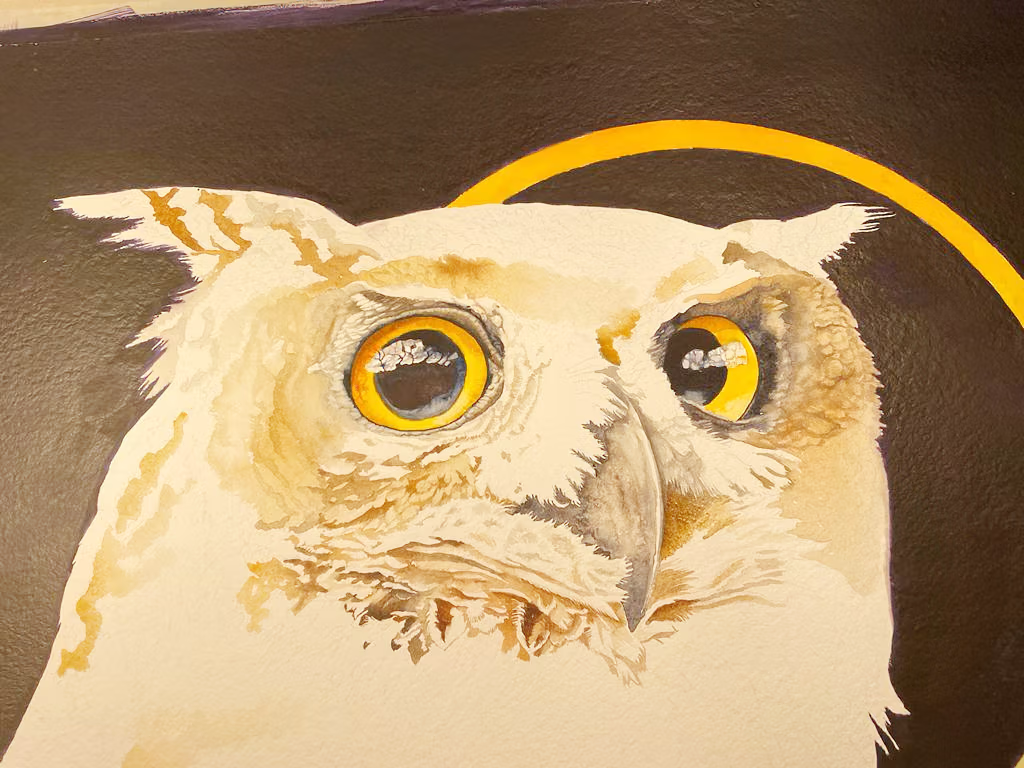
Painting in progress: Eyers complete.
My Mackinder’s Eagle Owl Conservation Commitment
25% of all proceeds
from “Mackinder’s Eagle Owl” artwork and merchandise goes to Kenya Bird of Prey Trust for their Raptor Rescue programmes.
Buy the Original or Prints
Coming Soon: Custom Frames and Matt boards - Over 100 styles!!!