Moneypenny was a Secretary Bird
(Sagitarius serpentanius)
This raptor of sub-Saharan Africa’s savannas, grasslands and shrub lands stands at nearly four feet tall—and standing is often how you’ll find them, because they primarily move around on foot. They fly only when necessary, such as to reach their nest in the trees and for courtship displays. They typically prey on snakes, lizards, and rodents, by flapping their wings for lift and balance and striking out with their impressively strong and sharp talons. They have quicker reactions than a black mamba snake!
The top half of its long legs has black feathers, so it looks a bit like it’s wearing bicycle shorts. The lower half is covered with scales and has barely visible feathers.
While it’s not known for certain where the name “secretary bird” comes from, one explanation is that they’re named after 19th century lawyer’s clerks, or secretaries. Secretaries typically wore gray coats and knee-length black pants, and they would tuck quill pens behind their ears, similar to the bird’s coloring and head feathers.
Human encroachment on secretary birds’ natural habitat has led the species to be classified as vulnerable to extinction. Some of its grasslands habitat has been burned and cleared for livestock. Those open areas leave little protection for prey animals, making it hard for secretary birds to find food.
About Moneypenny:
Moneypenny was discovered on the Maasai Mara with a mutilated leg in October 2014. Beyond treatment, due to delays in her discovery, the leg was amputated when she got to Kenya Bird of Prey Trust in Naivasha. Simon Thomsett, one of KBoP’s founders created a bamboo prosthesis, which Moneypenny (named after James Bond’s secretary), adapted to quite well. Unfortunately on a very cold night Moneypenny got tangled up with her prosthetic limb and ended up sprawled on the cold ground, dying of hyperthermia overnight.
About the painting:
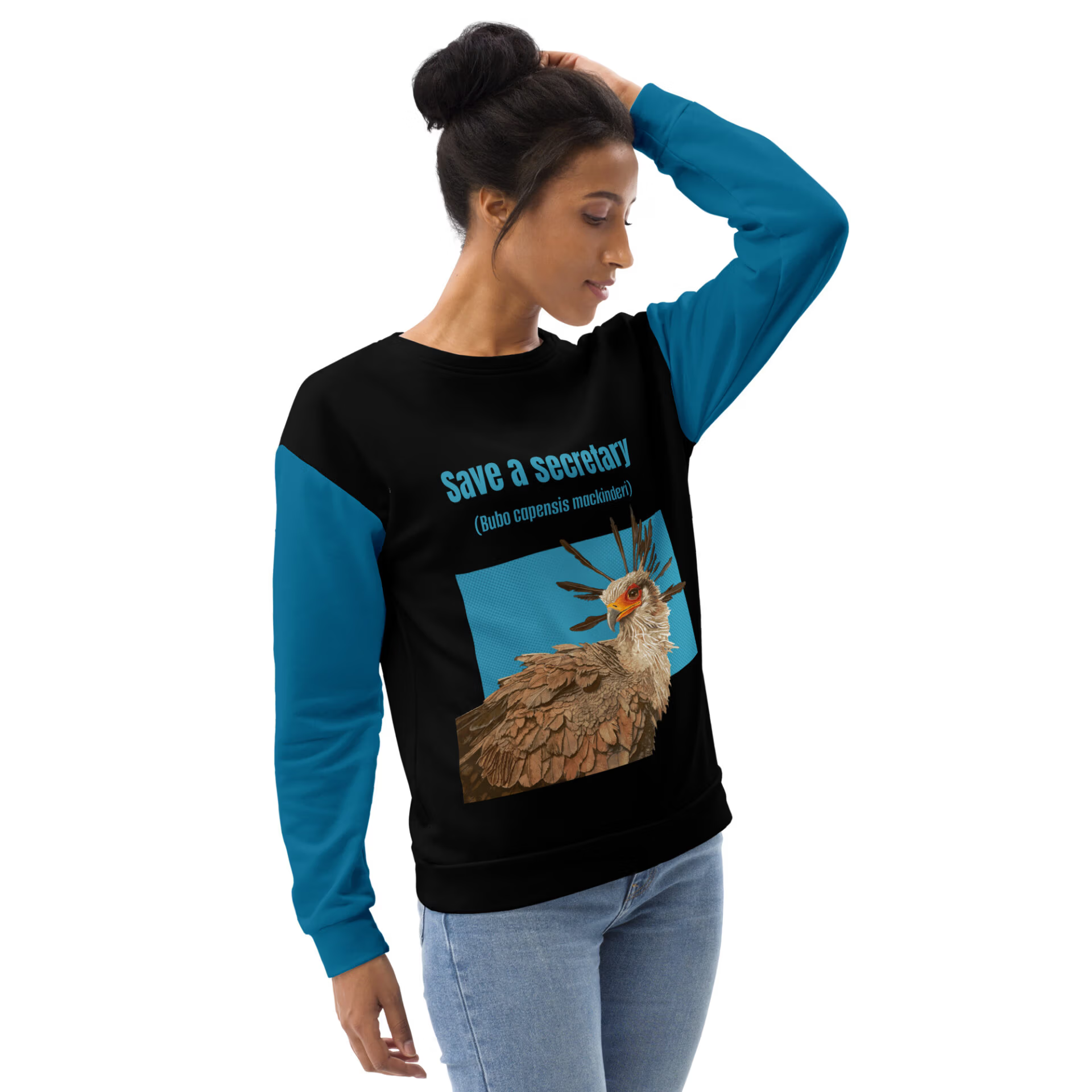
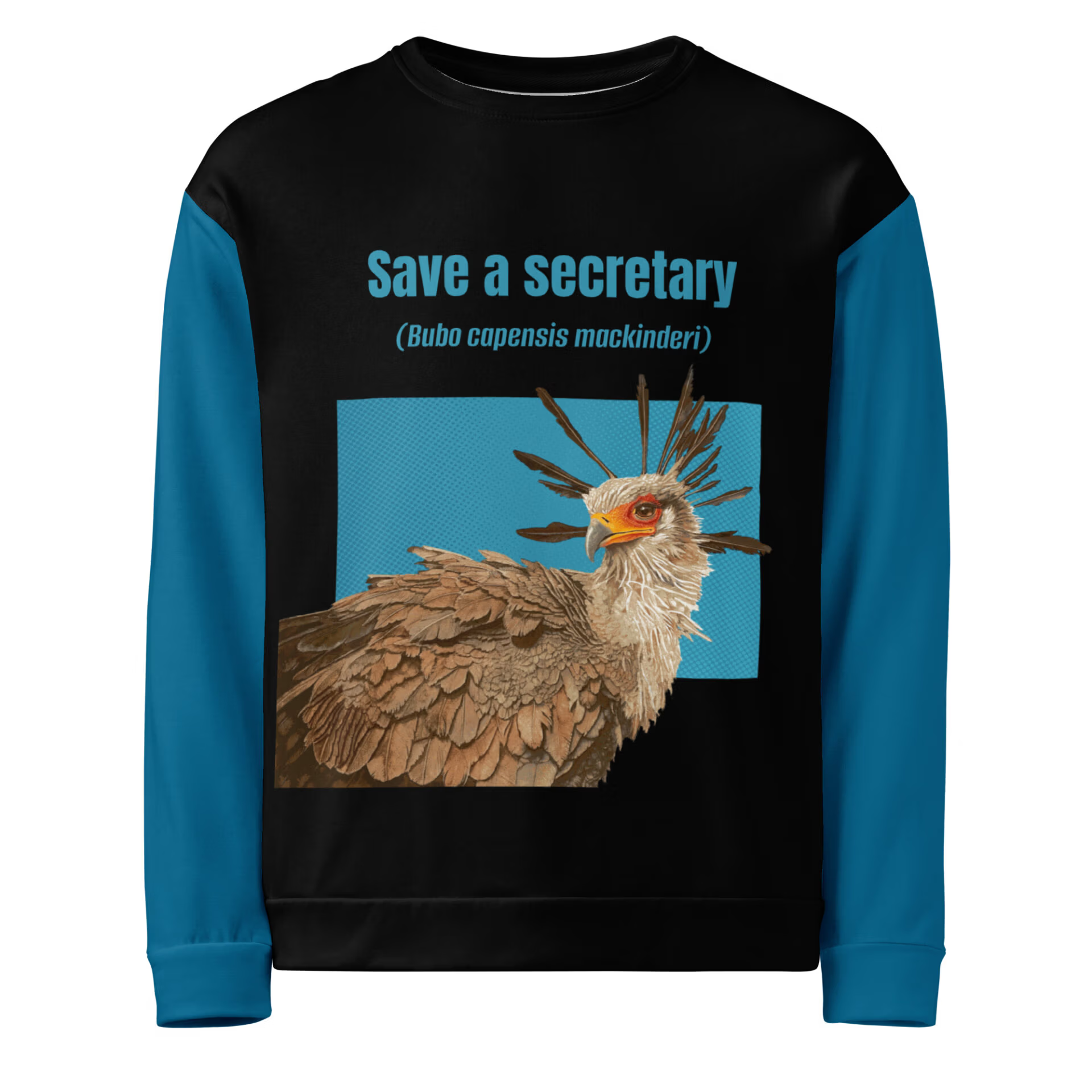
I never got the chance to meet Moneypenny, so this painting is characterized as “inspired by stories of” rather than a traditional portrait.
I found the image I wanted to paint, which was coincidentally taken by my friend Simon Thomsett, the co-founder (along with Shiv Kapila) of Kenya Bird of Prey Trust. He kindly, if after the fact, gave me his permission to use it as a reference.
For this painting I wanted to attempt a pure watercolor – no aquarelle pencils (except for parts of the face) and no gouache overpainting of feathers (though the matt background panel was done using gouache, which allows for very flat consistent color). This meant that every one of the many thousands of barbules highlights across all the feathers is painted by reverse, exposed-paper technique, so all the pale strands of feathers are painted around in darker pigment to leave the paler glaze showing as the feather. It is infinitely time consuming and slightly less realistic than simply painting feather barbs light-over-dark using gouache, but it’s also a bit satisfying in a perverse way, to stick to the purist “rules” of watercolor. I did use gouache and aquarelle pencils to add dimension to the pebbled skin around the eye.
Also, the only black pigment used in the painting is black gouache in the eyelashes. The black for feathers was produced by combining Payne’s Grey, VanDyke Brown, Prussian Blue and Alizarin Crimson. The pinkish grey feathers are a result of mixing Burnt Umber, Payne’s Gray and Burnt Sienna.
The painting won an honorable mention award at the 2022 Artists for Conservation juried exhibition.
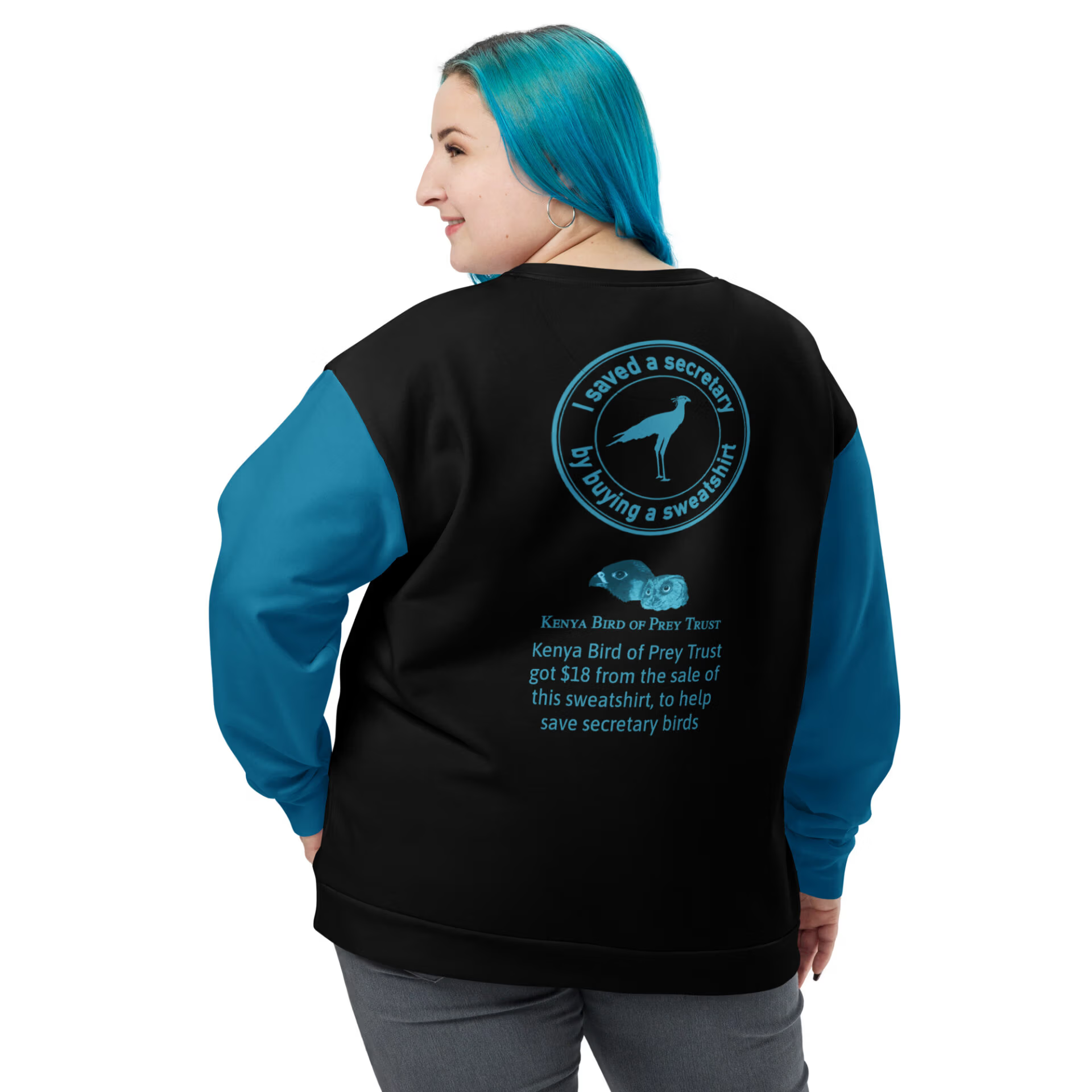
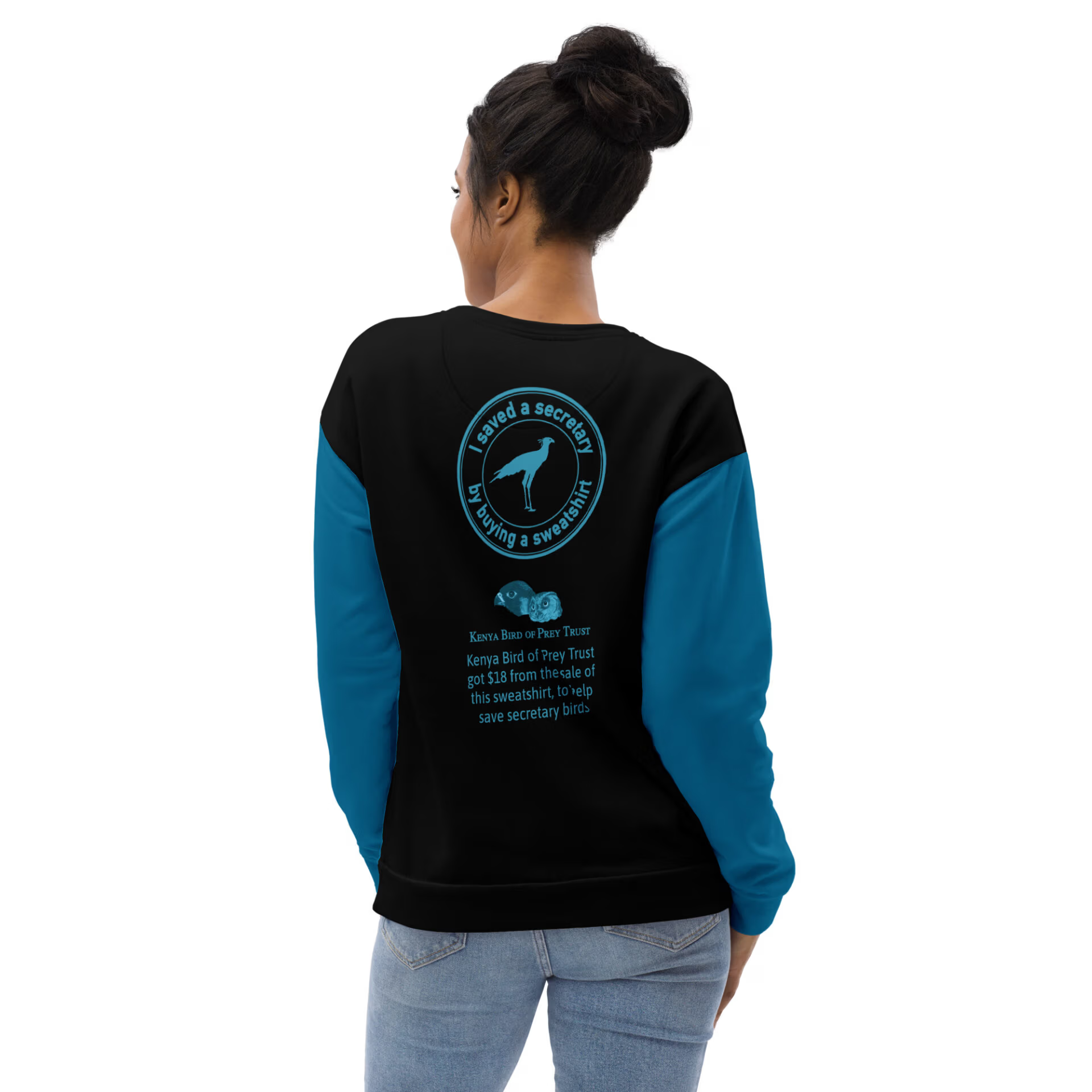
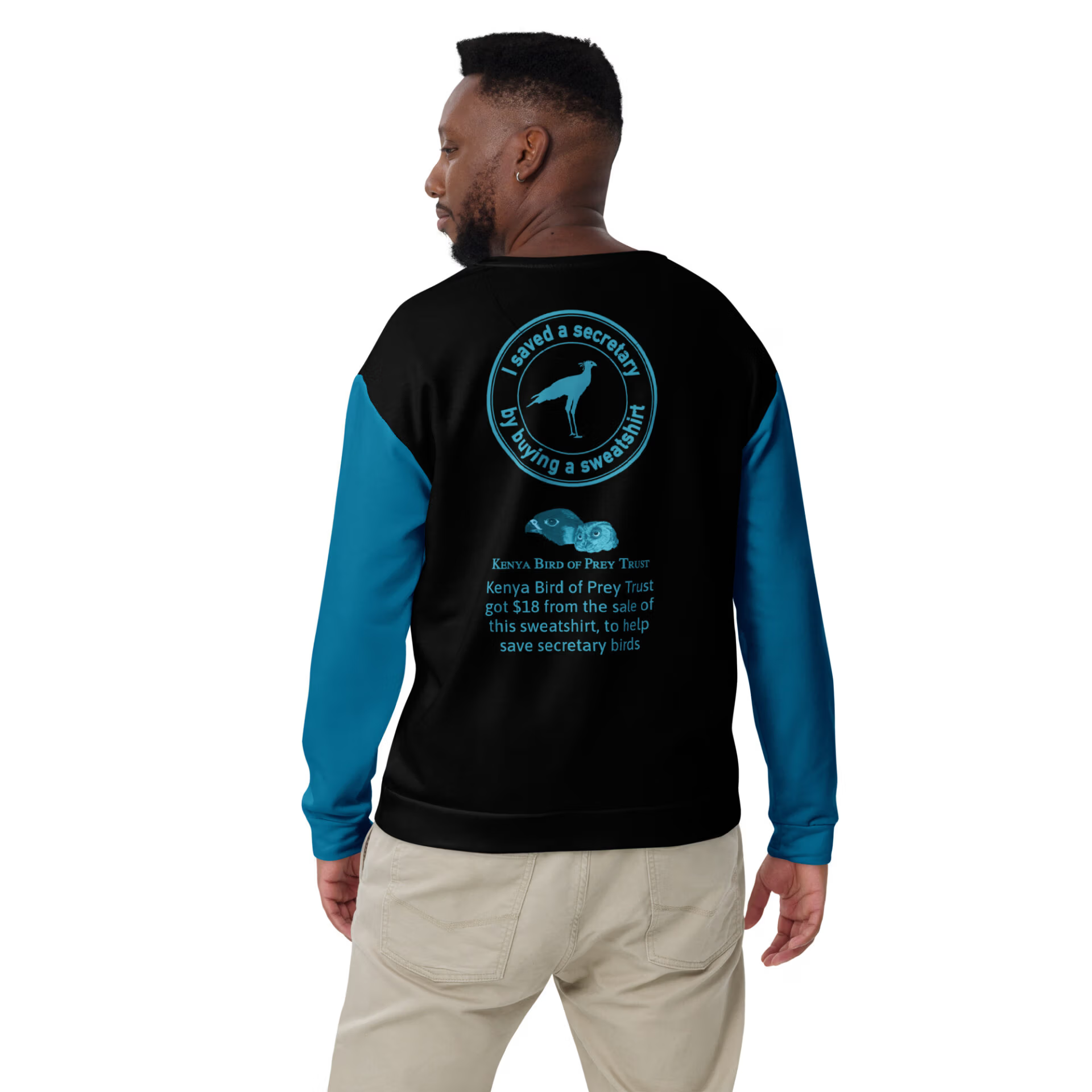
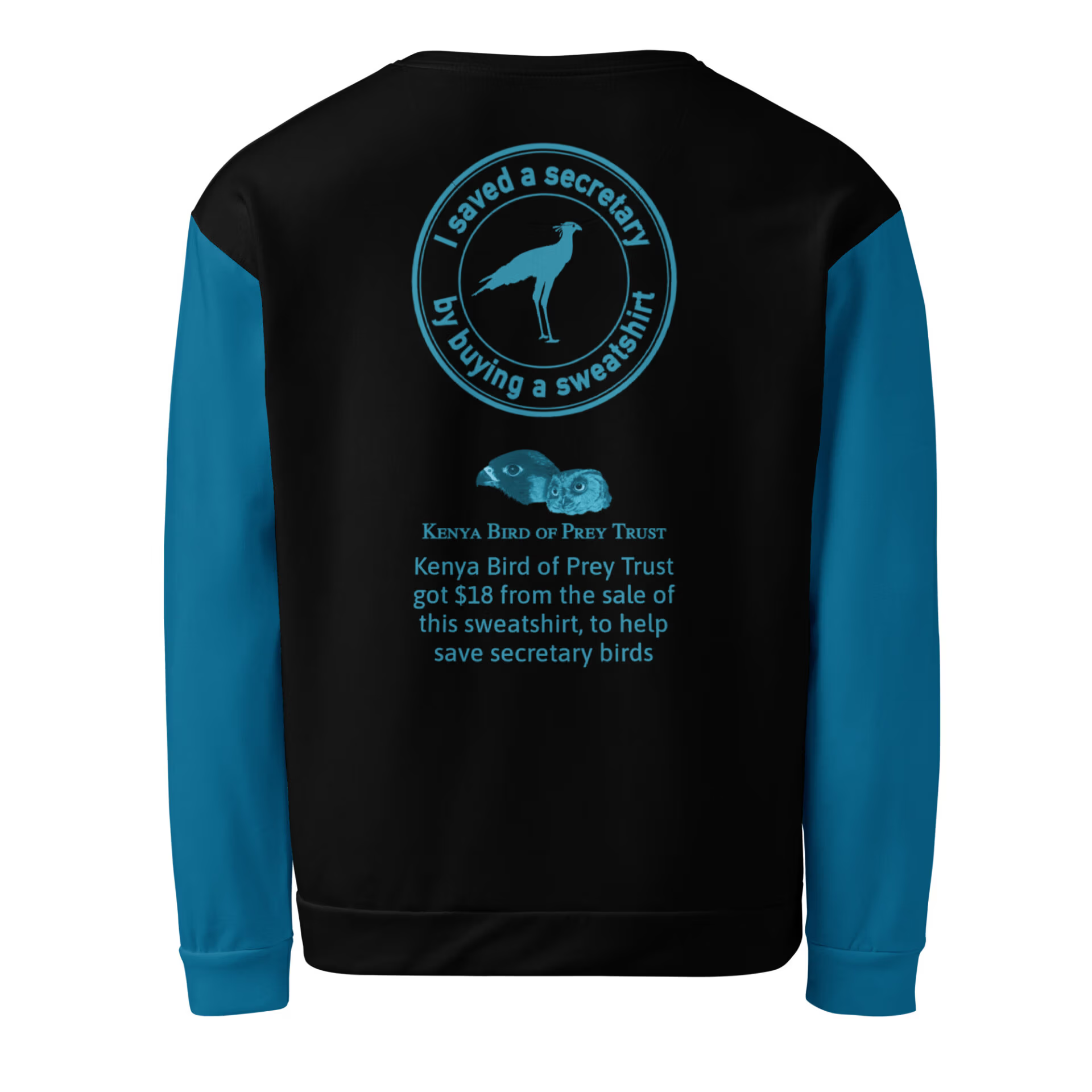
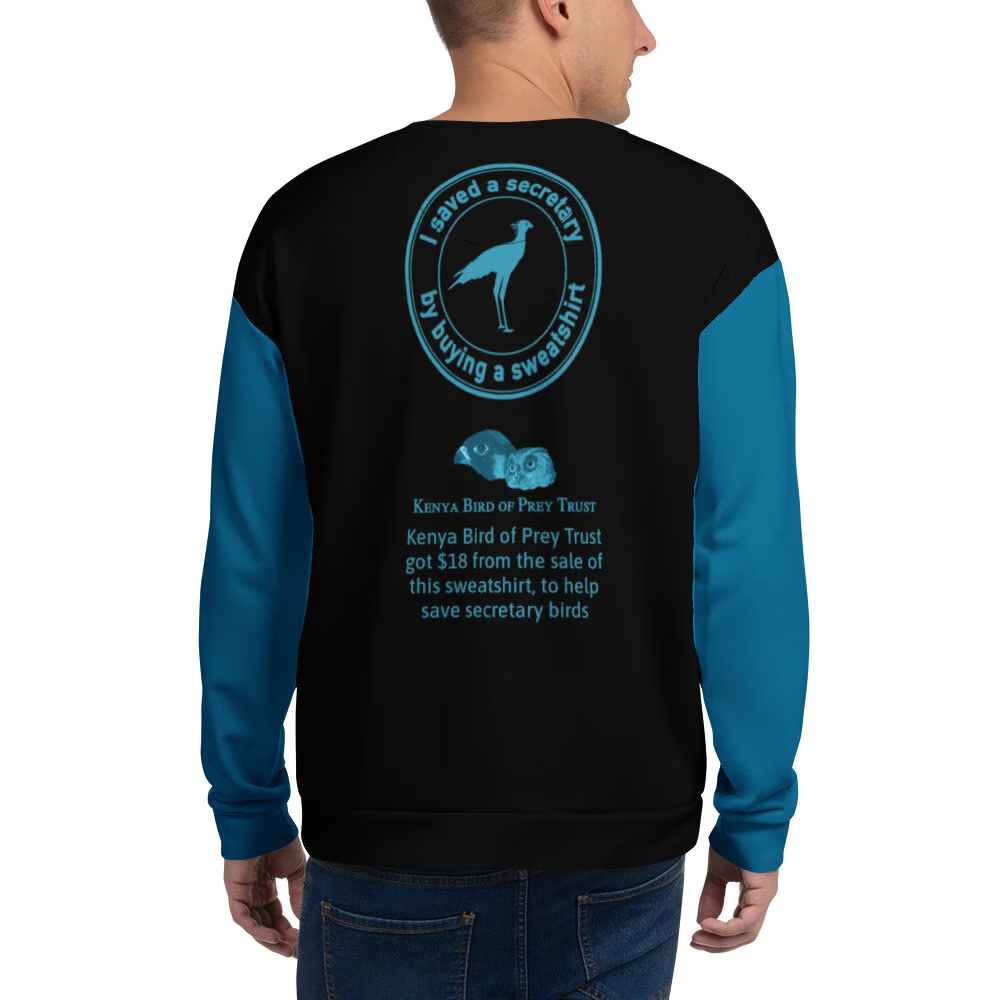
25% of all proceeds from Moneypenny art and merchandise is donated to Kenya Bird of Prey Trust, who work tirelessly to rescue, and protect all raptors, and monitor secretary bird populations in the Maasai Mara region. They educate local Kenyans on the value of raptors and how to protect raptor environments, and also lobby government to minimize above-ground electrical power line wiring, which is a primary hazard for birds of prey
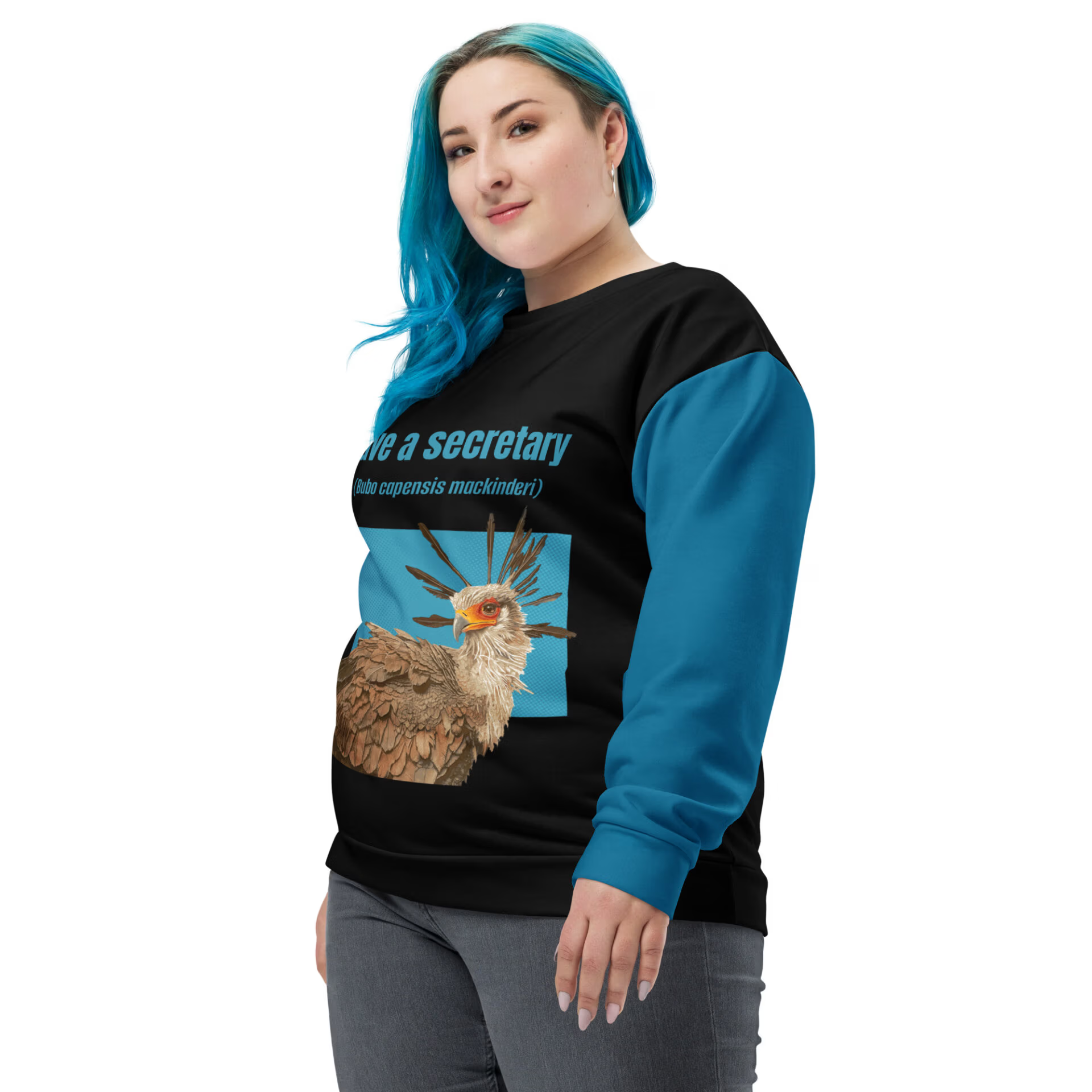
Each unique, all-over printed sweatshirt is precision-cut and hand-sewn to achieve the best possible look and bring out the intricate design. What’s more, the durable fabric with a cotton-feel face and soft brushed fleece inside means that this sweatshirt is bound to become your favorite for a long time.
• 96% recycled polyester, 4% elastane for manufacturing in the US/Mexico
• 95% recycled polyester, 5% elastane for manufacturing in Latvia
• Fabric weight (may vary by 5%): 9.08 oz./yd.² (308 g/m²)
• Soft cotton-feel face
• Brushed fleece fabric inside
• Unisex fit
• Overlock seams
• Blank components sourced from China
This product is made especially for you as soon as you place an order, which is why it takes us a bit longer to deliver it to you. Making products on demand instead of in bulk helps reduce overproduction, so thank you for making thoughtful purchasing decisions!
• Traceability:
– Knitting—China
– Dyeing—China
– Manufacturing—Latvia
• Contains 95% recycled polyester
• Contains 0% dangerous substances
• This item releases plastic microfibers into the environment during washing
Age restrictions: For adults
EU Warranty: 2 years
Other compliance information: Meets the flammability, and formaldehyde, lead, cadmium, phthalates, azo dyes, bisphenols and mercury level requirements.
In compliance with the General Product Safety Regulation (GPSR), Oak inc. and SINDEN VENTURES LIMITED ensure that all consumer products offered are safe and meet EU standards. For any product safety related inquiries or concerns, please contact our EU representative at gpsr@sindenventures.com. You can also write to us at 123 Main Street, Anytown, Country or Markou Evgenikou 11, Mesa Geitonia, 4002, Limassol, Cyprus.
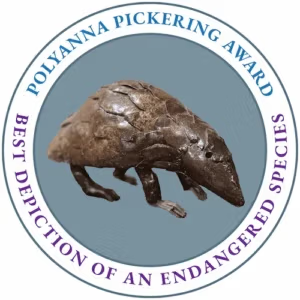 Polyanna Pickering Award for “Best Depiction of an Endangered Species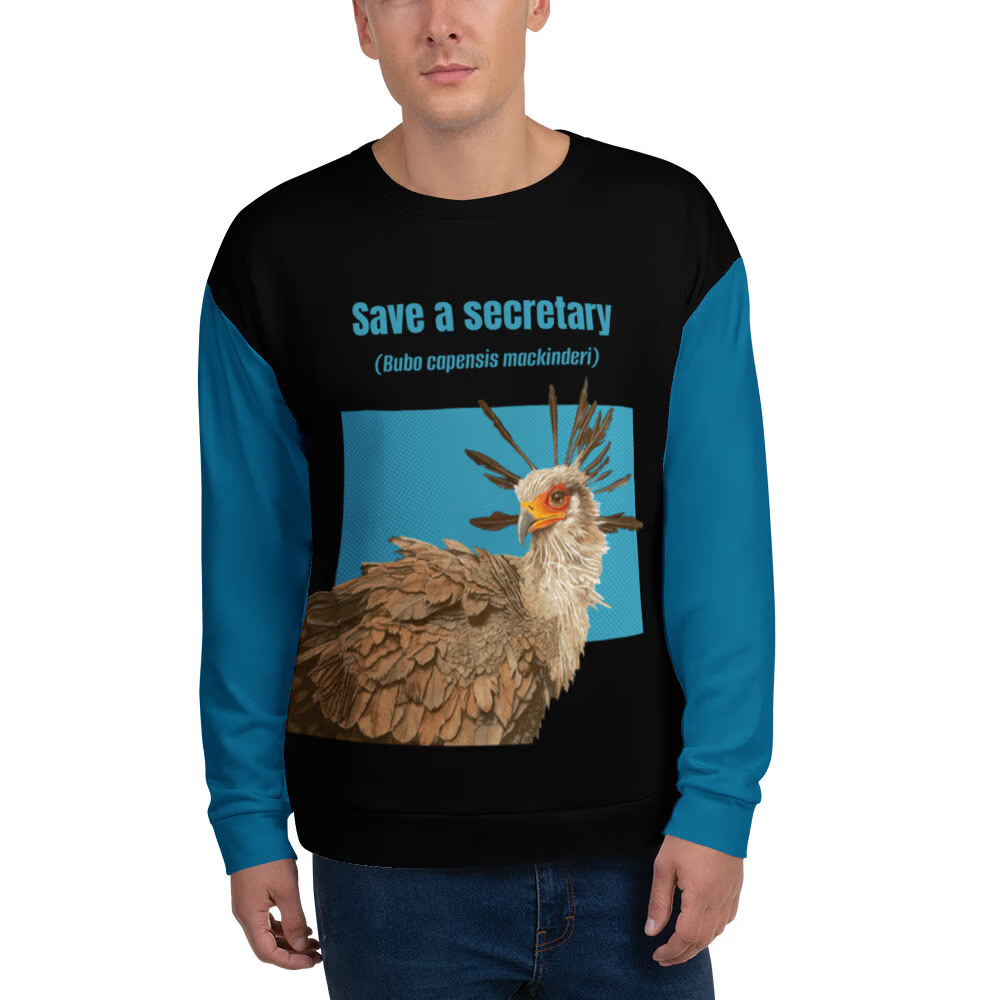

Reviews
There are no reviews yet.