
Taita Thrush
Watercolor, 31″ x 23″, on Legion Special Handmade Rough, 300 lb: $6,000 Sold
To zoom in, click on the image, then click the magnifying glass in the upper right corner of the page.
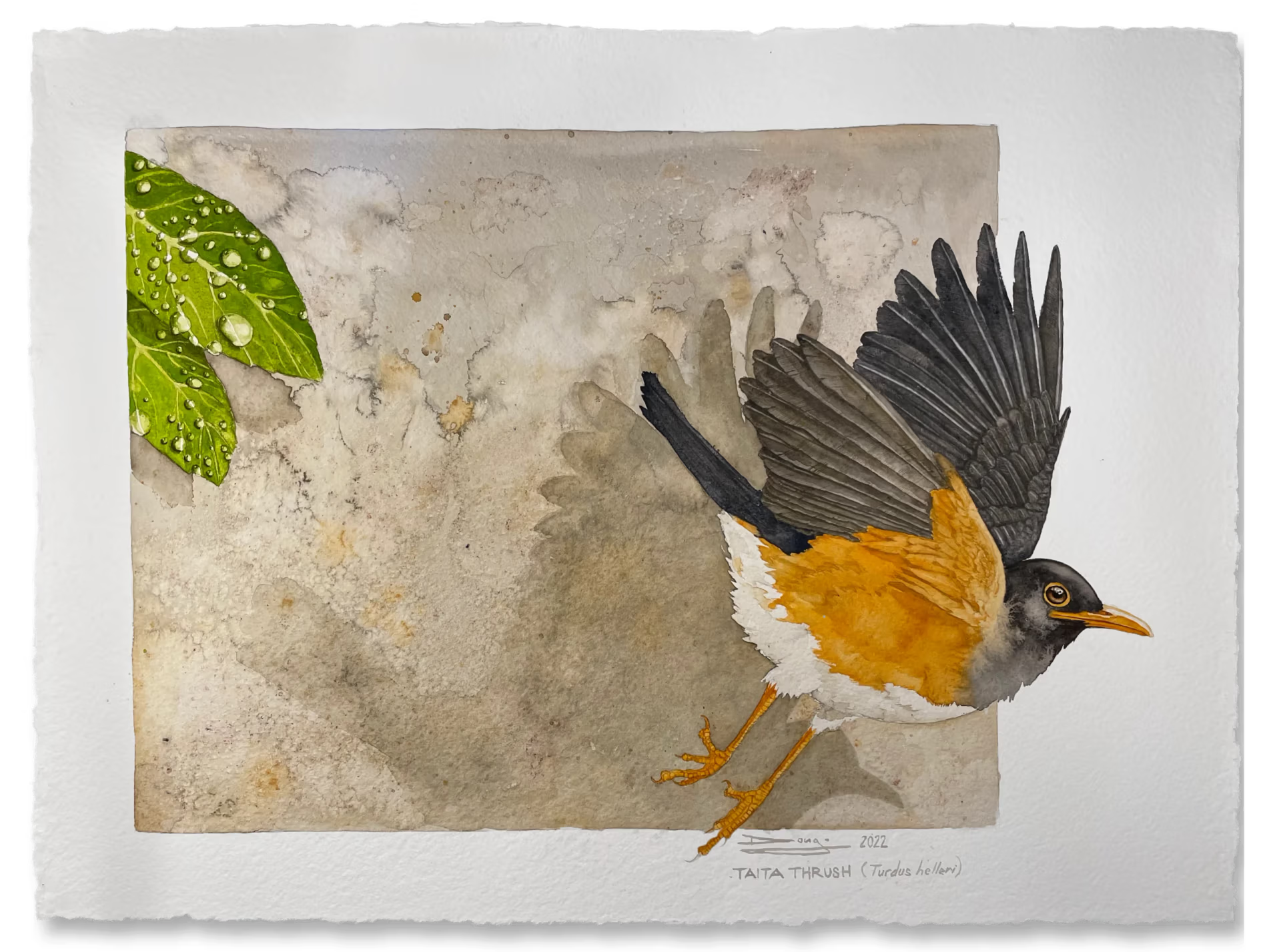
Taita Thrush (Turdus helleri)
About Taita Thrushes
A typical thrush with a dark gray back and breast, a black head, and a white belly with rufous sides. Also note the orange bill, eye-ring, and legs.
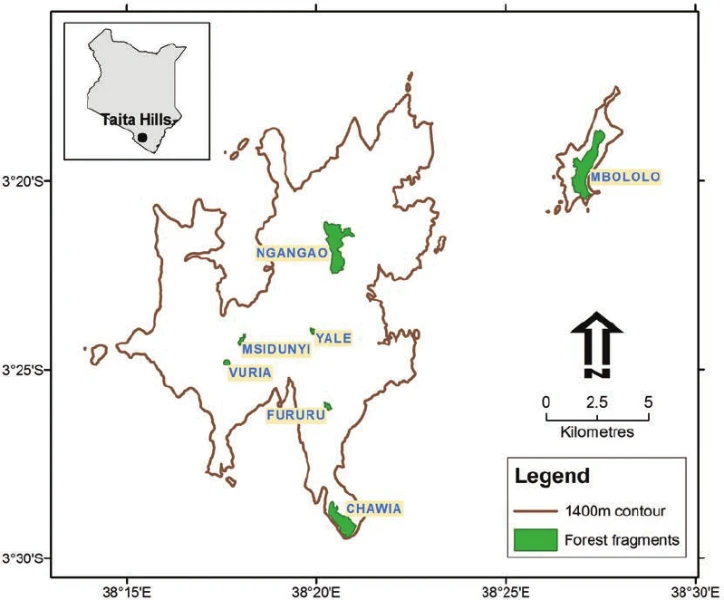
A scarce bird that is endemic to the Taita Hills of southeast Kenya. recent assessments suggest dramatic and rapid decrease in population – which probably ranges between 500 and 1,000 individuals, and is restricted to just four forest fragments, two of which support only 2-3 pairs each.
Taita thrushes prefer the understory of remnant scraps of montane forest, where it is shy and retiring. Distinctive within its tiny range. It has a typical thrush song, and its “chk-chk” and thin “tseeep” calls often reveal this understory specialist.
The Taita thrush is a very rare bird, and its habitat recedes year by year, due to draughts, climate change, encroachment by farmers and deforestation by illegal loggers.
Range Map of the Taita Thrush
Threats to the Taita Thrush
- Habitat Loss
The Taita Hills have experienced significant deforestation, with over 98% of the original forest cover lost, primarily due to human activities like agriculture and settlement. - Habitat Fragmentation:
Remaining forest patches are now fragmented and isolated, leading to reduced gene flow and increased vulnerability to inbreeding. - Invasive Species:
Invasive plants like Acacia mearnsii are encroaching on the remaining native forest, further degrading habitat. - Small, Isolated Populations:
The thrush’s limited distribution in four small forest fragments makes them highly vulnerable to extinction.
Conservation Efforts:
- Habitat Restoration:
Organizations like Nature Kenya, BirdLife International, and RSPB are working to restore native forests by clearing invasive species and reintroducing native trees. - Community Engagement:
Local communities are being involved in conservation efforts through education, sustainable farming practices, and income-generating activities like beekeeping. - Land Acquisition:
Efforts are underway to secure land through purchase or lease, particularly in critical areas like the Vuria corridor, to protect remaining forest patches. - Research and Monitoring:
Ongoing research is crucial to understand the thrush’s ecology, population dynamics, and the effectiveness of conservation interventions. - Translocation:
In some cases, translocation (moving birds from one area to another) has been used to boost populations in isolated fragments.
About the painting:
Like 99% of bird watchers and 99.9% of bird painters, I have never laid eyes on this most elusive subject. Very few photos (around a dozen in total) have been taken so I had to combine reference images with the olive thrush, the Taita’s nearest relative in appearance. I wanted to offset its striking plumage and capture its elusiveness by showing it in flight, flitting across a typical Taita Hills rainforest rock face, the whole image accented by typical rainforest leaves, dappled in dew. The cast shadow took a lot of thought and even some 3D modeling and light-casting to get right, but it adds a sense of movement and dimension to the piece.
25% of all proceeds from Taita thrush art and merchandise is donated to Nature Kenya, a grass roots natural history organization that commits resources to prevent extinctions and to monitor and map endangered bird life in the region. They, and a collective of organizations, such as Taita Taveta Wildlife Conservancies Association, Kenya Wildlife Service and the Royal Society for the Protection of Birds, not only work to identify and support breeding pairs, but are active in community empowerment and education projects to enroll smallholders in viable alternatives to deforestation from farm expansion and illegal logging. With government and NGO support they run innovative capacity-building initiatives and have earned the trust and cooperation of communities they work with. But bird habitats are still diminishing month by month and this species is on the cusp of extinction. So, maybe buy your partner and parents a couple of hoodies, sweatshirts or T’s, and think about sending a couple of beautiful Taita thrush posters as Xmas gifts this year!
My Taita Thrush Conservation Commitment
25% of all proceeds
from “Taita” artwork and merchandise goes to Nature Kenya for their Taita Hills conservation programmes
Buy the Original or Prints
Coming Soon: Custom Frames and Matt boards - Over 100 styles!!!