Eco Tote Bag: Save the Taita thrush

Price :

$36.00

Size Guide

The Taita Thrush
(Turdus helleri), is a very scarce bird (the rarest bird in Kenya), and is endemic to the Taita Hills of southeast Kenya. recent assessments suggest dramatic and rapid decrease in population – which probably ranges between 500 and 1,000 individuals, and is restricted to just four forest fragments, two of which support only 2-3 breeding pairs each.
The Taita thrush was previously classified as subspecies of the olive thrush (Turdus olivaceus ), but it is regarded as distinct species since 1985. It reaches a length between 20 and 22 centimetres. Head, breast and upperparts are coloured darkly. The underparts are white and the flanks have a rufous hue. The eyes and the bill exhibit a pale orange coloration. It was named after zoologist Edmund Heller (1875–1939) a workmate of the American ornithologist Edgar Alexander Mearns (1856–1916) who described this species scientifically in 1913.

About the painting

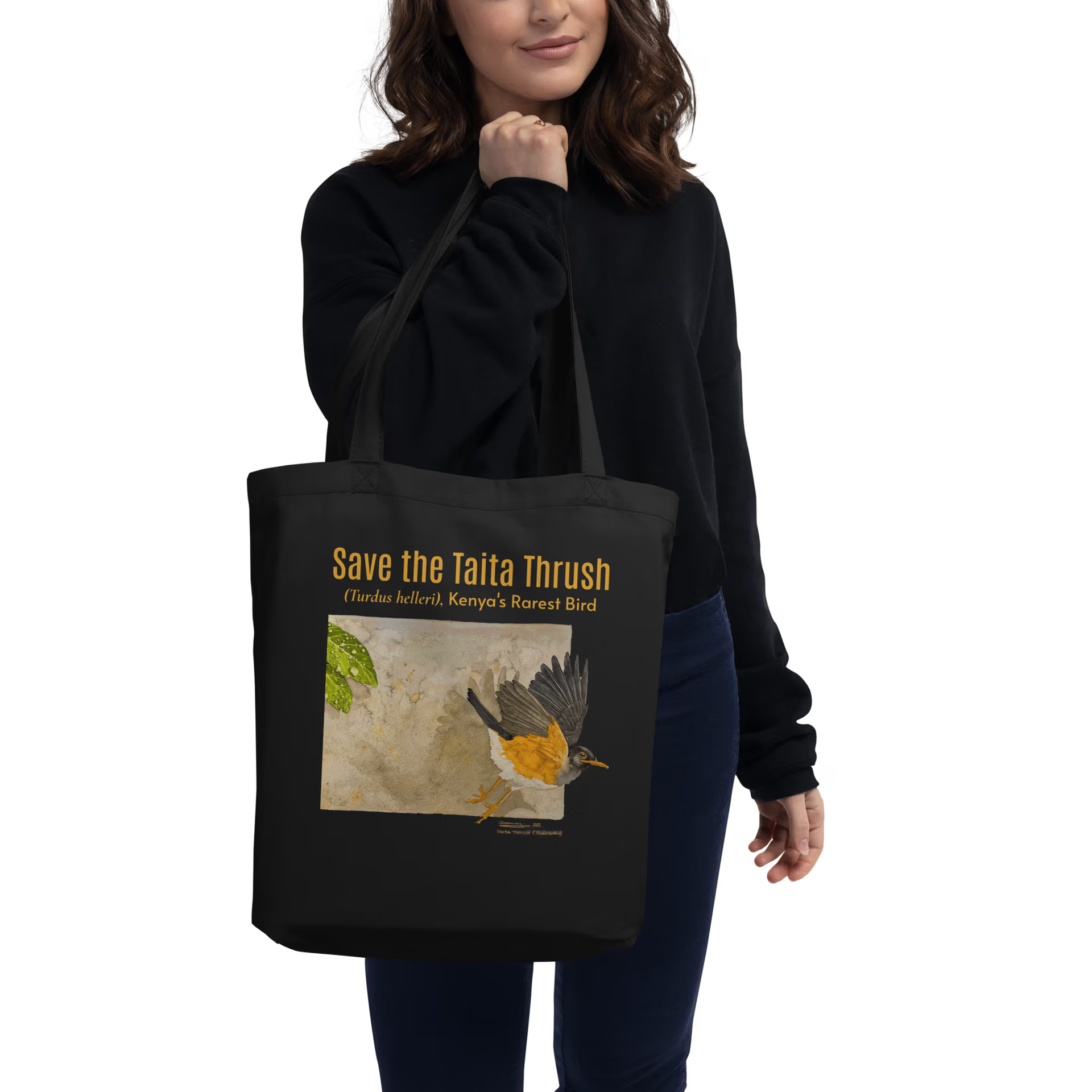
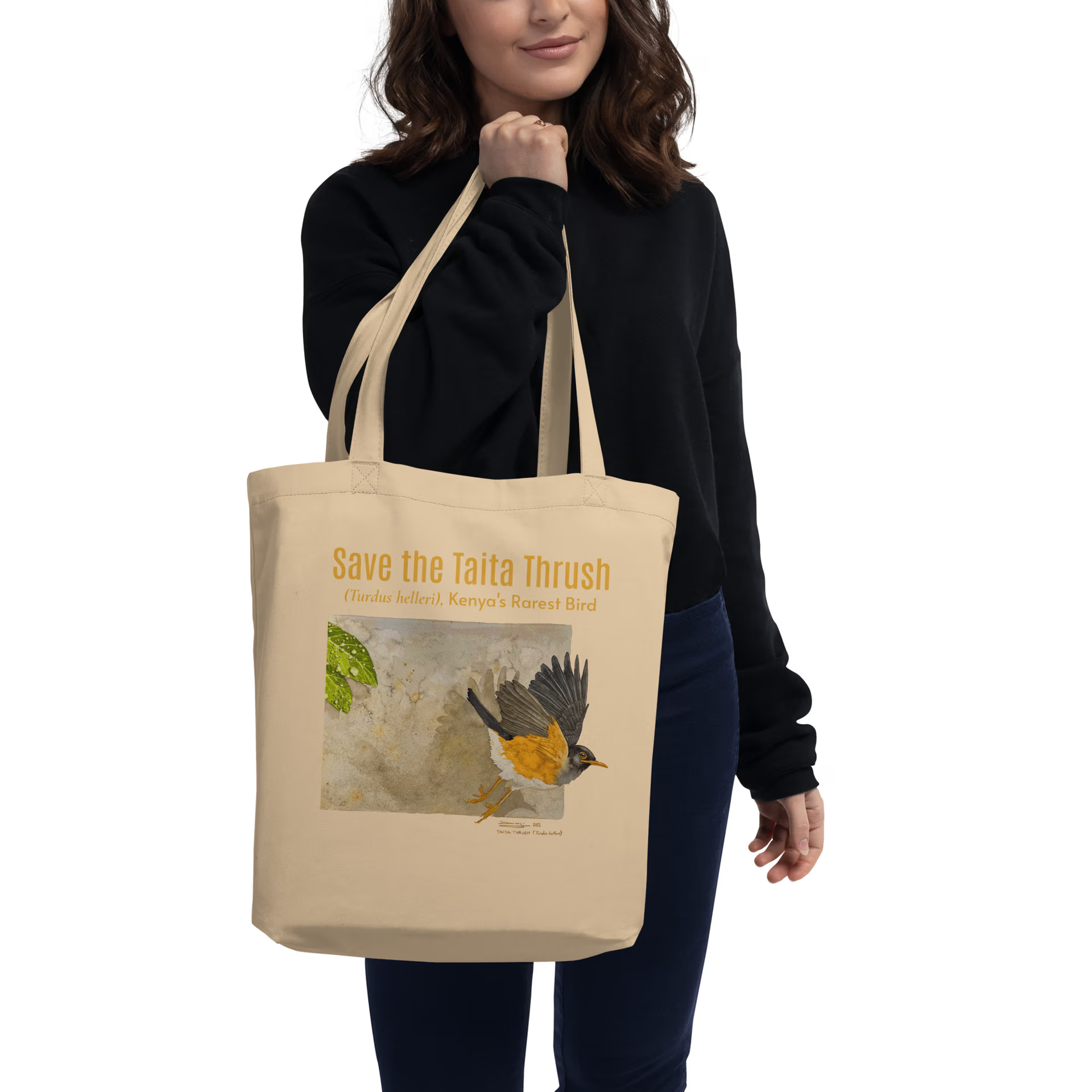
Like 99% of bird watchers and 99.9% of bird painters, I have never laid eyes on this most elusive subject. Very few photos (around a dozen in total) have been taken so I had to combine reference images with the olive thrush, the Taita’s nearest relative in appearance. I wanted to offset its striking plumage and capture its elusiveness by showing it in flight, flitting across a typical Taita Hills rainforest rock face, the whole image accented by typical rainforest leaves, dappled in dew. The cast shadow took a lot of thought and even some 3D modeling and light-casting to get right, but it adds a sense of movement and dimension to the piece.

25% of all proceeds from Taita thrush art and merchandise is donated to Nature Kenya, a grass roots natural history organization that commits resources to prevent extinctions and to monitor and map endangered bird life in the region. They, and a collective of organizations, such as Taita Taveta Wildlife Conservancies Association, Kenya Wildlife Service and the Royal Society for the Protection of Birds, not only work to identify and support breeding pairs, but are active in community empowerment and education projects to enroll smallholders in viable alternatives to deforestation from farm expansion and illegal logging. With government and NGO support they run innovative capacity-building initiatives and have earned the trust and cooperation of communities they work with. But bird habitats are still diminishing month by month and this species is on the cusp of extinction. So, maybe buy your partner and parents a couple of hoodies, sweatshirts or T’s, and think about sending a couple of beautiful Taita thrush posters as Xmas gifts this year!

Threats to the Taita Thrush:
• Habitat Loss
The Taita Hills have experienced significant deforestation, with over 98% of the original forest cover lost, primarily due to human activities like agriculture and settlement.
• Habitat Fragmentation:
Remaining forest patches are now fragmented and isolated, leading to reduced gene flow and increased vulnerability to inbreeding.
• Invasive Species:
Invasive plants like Acacia mearnsii are encroaching on the remaining native forest, further degrading habitat.
Small, Isolated Populations:
The thrush’s limited distribution in four small forest fragments makes them highly vulnerable to extinction. Conservation Efforts:
• Habitat Restoration:
Organizations like Nature Kenya, BirdLife International, and RSPB are working to restore native forests by clearing invasive species and reintroducing native trees.
• Community Engagement:
Local communities are being involved in conservation efforts through education, sustainable farming practices, and income-generating activities like beekeeping.
• Land Acquisition:
Efforts are underway to secure land through purchase or lease, particularly in critical areas like the Vuria corridor, to protect remaining forest patches.
• Research and Monitoring:
Ongoing research is crucial to understand the thrush’s ecology, population dynamics, and the effectiveness of conservation interventions.
• Translocation:
In some cases, translocation (moving birds from one area to another) has been used to boost populations in isolated fragments.
Action Plans:
• A comprehensive action plan for the Taita Hills forests includes strategies for habitat management, community participation, and policy support.

Say goodbye to plastic, and bag your goodies in this organic cotton tote bag. There’s more than enough room for groceries, books, and anything in between.

• 100% certified organic cotton 3/1 twill
• Fabric weight: 8 oz/yd² (272 g/m²)
• Dimensions: 16″ × 14 ½″ × 5″ (40.6 cm × 35.6 cm × 12.7 cm)
• Weight limit: 30 lbs (13.6 kg)
• 1″ (2.5 cm) wide dual straps, 24.5″ (62.2 cm) length
• Open main compartment
• Blank product sourced from India

This product is made especially for you as soon as you place an order, which is why it takes us a bit longer to deliver it to you. Making products on demand instead of in bulk helps reduce overproduction, so thank you for making thoughtful purchasing decisions!

Age restrictions: For adults
EU Warranty: 2 years
Other compliance information: Meets the azo dyes and formaldehyde level requirements.

In compliance with the General Product Safety Regulation (GPSR), Oak inc. and SINDEN VENTURES LIMITED ensure that all consumer products offered are safe and meet EU standards. For any product safety related inquiries or concerns, please contact our EU representative at gpsr@sindenventures.com. You can also write to us at 123 Main Street, Anytown, Country or Markou Evgenikou 11, Mesa Geitonia, 4002, Limassol, Cyprus.
Awards

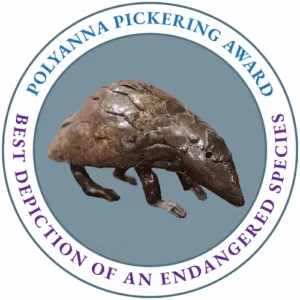
Polyanna Pickering Award for “Best Depiction of an Endangered Species
at the 2021 Artists for Conservation Juried Exhibition

Reviews

There are no reviews yet.

Be the first to review “Eco Tote Bag: Save the Taita thrush”

Your email address will not be published. Required fields are marked *

The Taita Thrush
(Turdus helleri), is a very scarce bird (the rarest bird in Kenya), and is endemic to the Taita Hills of southeast Kenya. recent assessments suggest dramatic and rapid decrease in population – which probably ranges between 500 and 1,000 individuals, and is restricted to just four forest fragments, two of which support only 2-3 breeding pairs each.
The Taita thrush was previously classified as subspecies of the olive thrush (Turdus olivaceus ), but it is regarded as distinct species since 1985. It reaches a length between 20 and 22 centimetres. Head, breast and upperparts are coloured darkly. The underparts are white and the flanks have a rufous hue. The eyes and the bill exhibit a pale orange coloration. It was named after zoologist Edmund Heller (1875–1939) a workmate of the American ornithologist Edgar Alexander Mearns (1856–1916) who described this species scientifically in 1913.

About the painting

Like 99% of bird watchers and 99.9% of bird painters, I have never laid eyes on this most elusive subject. Very few photos (around a dozen in total) have been taken so I had to combine reference images with the olive thrush, the Taita’s nearest relative in appearance. I wanted to offset its striking plumage and capture its elusiveness by showing it in flight, flitting across a typical Taita Hills rainforest rock face, the whole image accented by typical rainforest leaves, dappled in dew. The cast shadow took a lot of thought and even some 3D modeling and light-casting to get right, but it adds a sense of movement and dimension to the piece.

25% of all proceeds from Taita thrush art and merchandise is donated to Nature Kenya, a grass roots natural history organization that commits resources to prevent extinctions and to monitor and map endangered bird life in the region. They, and a collective of organizations, such as Taita Taveta Wildlife Conservancies Association, Kenya Wildlife Service and the Royal Society for the Protection of Birds, not only work to identify and support breeding pairs, but are active in community empowerment and education projects to enroll smallholders in viable alternatives to deforestation from farm expansion and illegal logging. With government and NGO support they run innovative capacity-building initiatives and have earned the trust and cooperation of communities they work with. But bird habitats are still diminishing month by month and this species is on the cusp of extinction. So, maybe buy your partner and parents a couple of hoodies, sweatshirts or T’s, and think about sending a couple of beautiful Taita thrush posters as Xmas gifts this year!

Threats to the Taita Thrush:
• Habitat Loss
The Taita Hills have experienced significant deforestation, with over 98% of the original forest cover lost, primarily due to human activities like agriculture and settlement.
• Habitat Fragmentation:
Remaining forest patches are now fragmented and isolated, leading to reduced gene flow and increased vulnerability to inbreeding.
• Invasive Species:
Invasive plants like Acacia mearnsii are encroaching on the remaining native forest, further degrading habitat.
Small, Isolated Populations:
The thrush’s limited distribution in four small forest fragments makes them highly vulnerable to extinction. Conservation Efforts:
• Habitat Restoration:
Organizations like Nature Kenya, BirdLife International, and RSPB are working to restore native forests by clearing invasive species and reintroducing native trees.
• Community Engagement:
Local communities are being involved in conservation efforts through education, sustainable farming practices, and income-generating activities like beekeeping.
• Land Acquisition:
Efforts are underway to secure land through purchase or lease, particularly in critical areas like the Vuria corridor, to protect remaining forest patches.
• Research and Monitoring:
Ongoing research is crucial to understand the thrush’s ecology, population dynamics, and the effectiveness of conservation interventions.
• Translocation:
In some cases, translocation (moving birds from one area to another) has been used to boost populations in isolated fragments.
Action Plans:
• A comprehensive action plan for the Taita Hills forests includes strategies for habitat management, community participation, and policy support.

Say goodbye to plastic, and bag your goodies in this organic cotton tote bag. There’s more than enough room for groceries, books, and anything in between.

• 100% certified organic cotton 3/1 twill
• Fabric weight: 8 oz/yd² (272 g/m²)
• Dimensions: 16″ × 14 ½″ × 5″ (40.6 cm × 35.6 cm × 12.7 cm)
• Weight limit: 30 lbs (13.6 kg)
• 1″ (2.5 cm) wide dual straps, 24.5″ (62.2 cm) length
• Open main compartment
• Blank product sourced from India

This product is made especially for you as soon as you place an order, which is why it takes us a bit longer to deliver it to you. Making products on demand instead of in bulk helps reduce overproduction, so thank you for making thoughtful purchasing decisions!

Age restrictions: For adults
EU Warranty: 2 years
Other compliance information: Meets the azo dyes and formaldehyde level requirements.

In compliance with the General Product Safety Regulation (GPSR), Oak inc. and SINDEN VENTURES LIMITED ensure that all consumer products offered are safe and meet EU standards. For any product safety related inquiries or concerns, please contact our EU representative at gpsr@sindenventures.com. You can also write to us at 123 Main Street, Anytown, Country or Markou Evgenikou 11, Mesa Geitonia, 4002, Limassol, Cyprus.

Awards

Polyanna Pickering Award for “Best Depiction of an Endangered Species

at the 2021 Artists for Conservation Juried Exhibition

Reviews

There are no reviews yet.

Be the first to review “Eco Tote Bag: Save the Taita thrush”

Your email address will not be published. Required fields are marked *